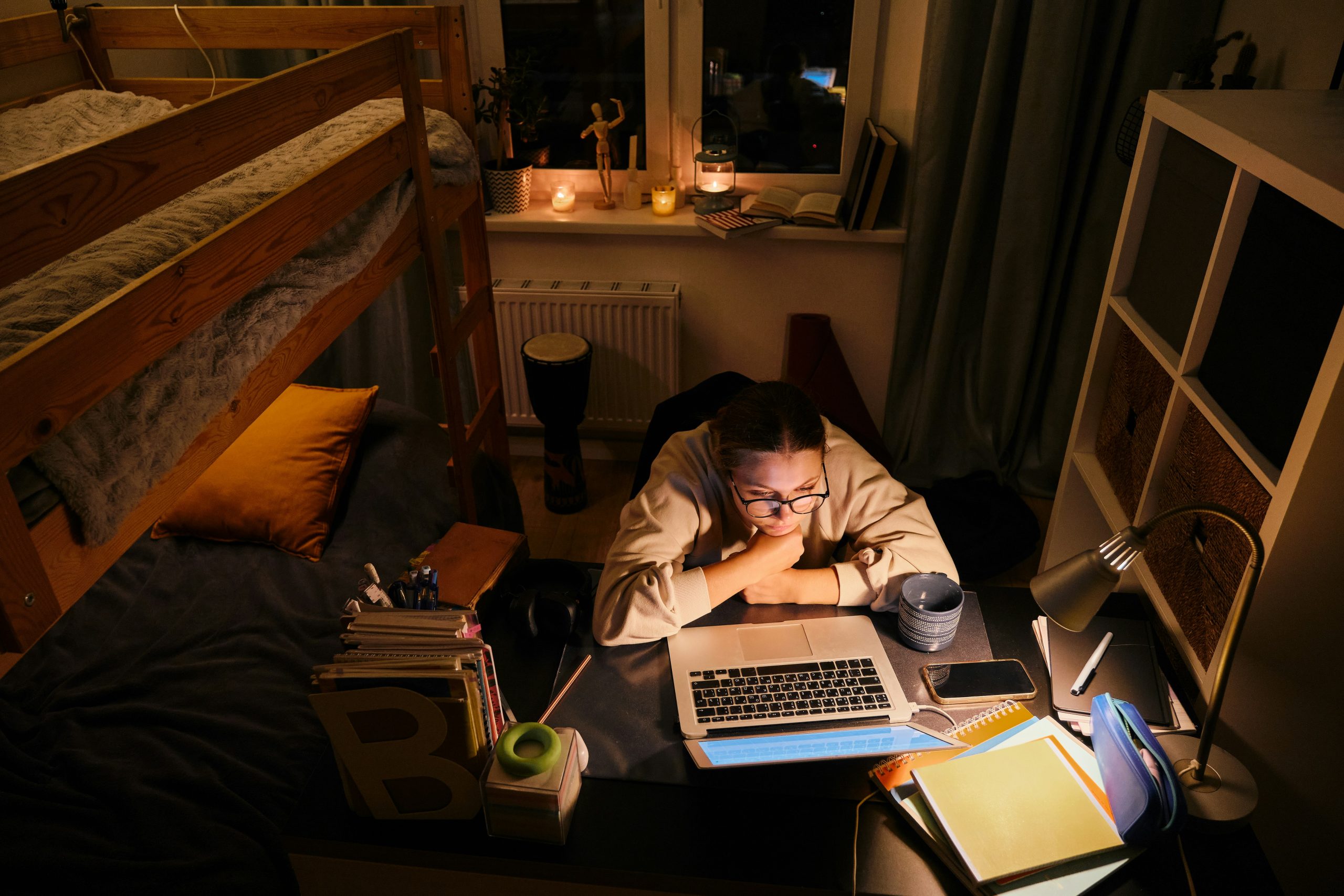
Choosing where to live during university years is more than a logistical decision. It shapes your daily routines, relationships, study habits and even mental wellbeing. It can be scary. In recent years, large student housing complexes have appeared in many European cities, in Gdansk as well. They often promise impressive amenities and scale: hundreds of rooms, large lounges, gyms and event spaces.
But research and student experience increasingly point in another direction. Smaller, well-designed student houses often create better living environments than large, anonymous dormitory complexes.
In student housing, smaller can mean better relationships, greater privacy and a healthier balance between studying and social life.
Also, for many international students searching for student accommodation in Gdansk, choosing between large dorm complexes and smaller student houses can significantly shape their daily life.
What research says: How building size affects student life
Research on student housing design and residential satisfaction shows that lower residential density and clustered layouts are associated with higher wellbeing and stronger social connections among students.
So, when fewer students share a building or a floor, several positive effects appear:
- Lower residential density leads to higher satisfaction and less perceived crowding.
- More privacy supports concentration and rest.
- Smaller social groups encourage stronger relationships rather than superficial hallway interactions.
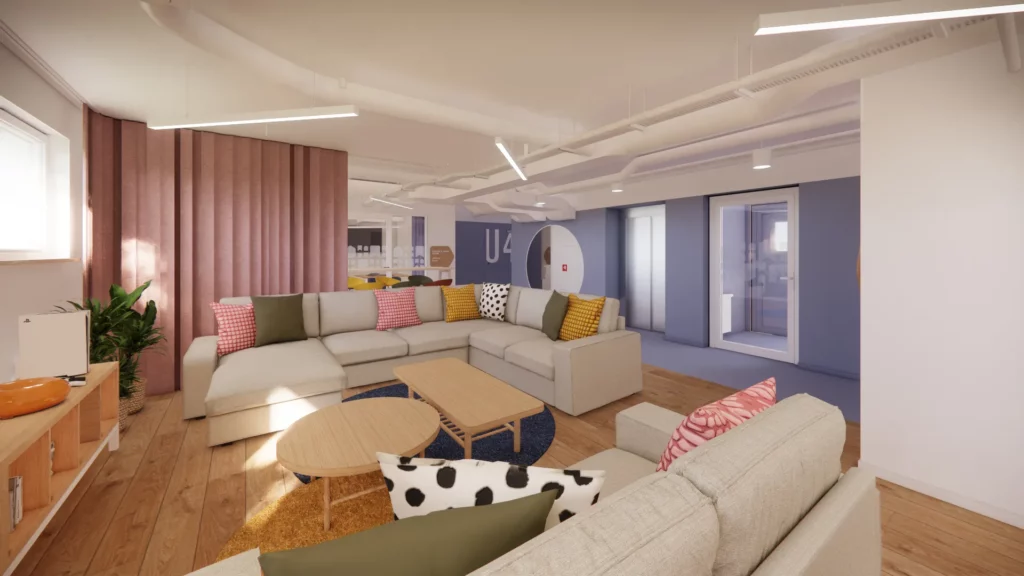
Another important factor is the spatial structure of the building. Traditional dormitories often rely on very long corridors with dozens of rooms on each side. In contrast, modern housing research highlights the benefits of cluster layouts, where small groups of rooms share semi-private spaces such as kitchens or lounges.
Students living in these “micro-communities” tend to report:
- stronger social ties,
- a greater sense of belonging,
- and a more balanced level of social interaction.
What is interesting, that the opposite extreme can also create problems. Fully isolated apartment-style housing with almost no shared spaces sometimes leads to greater social isolation, making spontaneous support, mentoring or collaborative studying less likely.
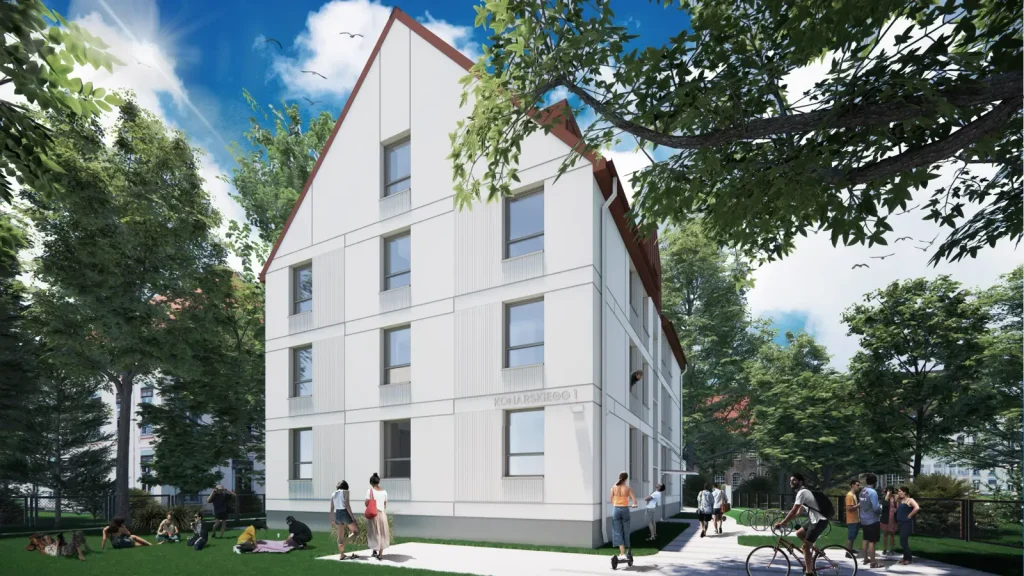
Does small student housing actually create real community?
In very large student complexes, it is easy to feel anonymous. When hundreds of people share the same building, interactions often remain superficial.
You may recognize faces in the elevator or kitchen, but building deeper relationships becomes harder. But in smaller student accommodation, the dynamics are usually different.
Residents start to recognize each other quickly. The same people share the kitchen, lounge or study spaces regularly. Conversations happen naturally over coffee, while cooking dinner, or when preparing for exams.
Over time, these everyday interactions create micro-communities, where students:
- help each other with coursework,
- share notes or study tips,
- exchange cultural experiences,
- and form friendships that last beyond university.
For international students especially, this kind of environment can make a difference. Arriving in a new city or country can feel overwhelming. Living in a smaller student community often provides a soft landing into local student life.
Instead of feeling lost in a building of hundreds of residents, students become part of a recognizable, supportive group in the very first days.
Privacy without isolation
One of the biggest advantages of smaller student housing is the balance between personal space and social life.
In big dormitories, noise, constant movement and lack of privacy can quickly become stressful. Long corridors with dozens of rooms often create environments where there is always activity – people walking, doors opening, conversations echoing through hallways.
Lower density housing offers a different rhythm. With fewer residents sharing a floor or building:
- corridors are quieter,
- common spaces are less crowded,
- and students can retreat to their rooms when they need focus.
This balance allows residents to choose their level of interaction and also have a better sleep.
The role of well-designed common spaces
Another factor that strongly influences student satisfaction is the quality of shared spaces.
Research consistently shows that common areas such as lounges, kitchens, gyms or cafés increase the overall “living experience” score of student housing. They encourage social interaction, relaxation and collaboration.
In very large complexes, common areas may look impressive but often feel crowded or impersonal. Students may use them less frequently if they are constantly busy or dominated by large groups.
In smaller student houses, shared spaces typically feel more accessible and familiar. Residents begin to treat them as extensions of their living space, rather than anonymous facilities.

What to look for when choosing student housing in Gdansk?
If you are choosing accommodation in a university city such as Gdansk, consider looking beyond the size of the building.
Instead, ask practical questions:
How many residents share a floor?
Lower density usually means less noise and greater comfort.
Are rooms organized in clusters or long corridors?
Cluster layouts tend to create stronger communities and better living experiences.
Are there well-designed common spaces?
Look for lounges, study rooms or kitchens that encourage interaction without feeling crowded.
Is there a balance between privacy and community?
The best student housing supports both independence and connection.
Summary
When students look for accommodation in a city like Gdansk, it is easy to focus on numbers: price, the size of the building, the number of amenities or the scale of the residence. But the real quality of student living is often shaped by something less visible – the atmosphere and everyday experience of the place.
Smaller student houses often offer something that large dormitory complexes struggle to create: a real sense of community, balanced privacy and a living environment that supports both studying and social life. It’s just social science where small places create society.
At the same time, students shouldn’t feel pressure to perfectly design their own living environment. Well-designed student residences already take these needs into account. Through thoughtful architecture, smaller communities and carefully planned shared spaces, student housing providers increasingly create environments that support focus, rest and social connection.
![Private student dormitory in Gdansk: Top 5 student accommodation Gdansk in Poland [2026]](wp-content/uploads/2026/04/eduardo-ramos-_SyT1mXmQ9k-unsplash-1024x683.jpg)

![Is it hard to find student accommodation in Gdansk as an Erasmus student? [2026 guide]](wp-content/uploads/2026/02/curated-lifestyle-1IBI-1wp9xs-unsplash-1024x702.jpg)